Featured post

VIDA DE-sign by Michael Buckingham, aka Mick Muttley

Dear friends (yeah really, one of those) I have become a women's wear designer for VIDA! http://shopvida.com/collections/voices/ ...

Thursday, 4 February 2010

SubVersion Stop 71: Case study 1: Madonna - "Hung Up"


Madonna has, over the years, adapted chameleon-like to her climate. This characteristic enables her to succeed in the popular music world - where musical novelty is paramount - and "Hung Up" is a prime example of how lifting from the 70s pop style, with a beat rewired for the iPod and commercial dance generation can work effectively.

This is popular music as it's liked by many - the song would become her eleventh number one single. It can be played in a variety of contexts - on the radio at work, in the home before one goes out, via the MP3 player - thus quadrupling its appeal to the mainstream audience, for which it is intended. Through listening contexts formal and informal, thanks to the simplistic structure, reviving the sounds of 1980s pop doesn't become an exercise in pure pastiche.

The song has hazily familiar hooks, recalling traditional themes of disco - love, loss and good times - sustained overlays of the string arrangement, and keyboard melodies enveloping to administer a haze-like timbre. Paradoxically, the pulse is clear from the outset by the implementation of a metronomic tick-tock, which leads into a filtered riff, taken from Abba's "Gimme Gimme Gimme".

This lifting embodies the changing cultural identity of sampling, and its popularity quantifies why this can be seen as a piece of popular music as well. The actuality of the sample's presence can further placate public consciousness through familiarity with older values and repertoires. "Time goes by" is sung in descending pitch, with repetition of the phrase conveying a suspension of limits. The addition of delay on Madonna's vocals supplants any questioning over how fast time is passing, not to mention eliciting that the singer is trapped in an ongoing musical current, comparable to the fast-flowing nature of societal existence.

Metre and pulse co-exist comfortably as four-time and four-to-the-floor, both inextricably clear. A conventional verse-refrain structure is upheld. Madonna sings not melismata, but broken, almost static shifts between notes - "Every little thing" rises in pitch on each syllable, whereas "that you say or do" peaks and then is in descent. The convergence of themes conveys how the words are fleeting - the singer is "hung up" which can mean unstable; precariously positioned. The syncopated melodies and rhythm validates this aspect, by the contrapuntal sum of parts audible from the chorus and chugging aesthetic.

Madonna's speech is evenly distributed on the track, yet the rhythm is multilayered and as such compliments what it accentuates. A tum-tum-tum-tum ordination of the main beat is where the lyrics sit and angle off, their texture wispy, thin and spread across parameters in line with the filtering sample and chorus motif. Harmonies are consonant at 00:32-00:48, filled out and wholesome but in comparison the early section is waiting to develop a thicker skin from the intro filtration towards the main hook.

There is a definite sense that Madonna is making use of space between words, whereby she crams more into each bridging phrase in a continuum, impressioning that she's "fed up of waiting for you" (re-iterated at 01:30 for the second interval). Concerning emotions broadcast lyrically, the song is obviously written from the perspective of a girl who once had nothing, and the narrative centres around love (or rather, the lack thereof). By adhering to commonplace structure there's no doubt the message becomes more accessible, if not endearing, depending on your standpoint with commercial dance.

The dynamics are pretty standardised for the genre, but what they do conjure is fidelity. The stomp of the bass is turgid, the vocals flaccid. This juxtaposition commands your attentiveness and, combined with that Abba riff, delivers a potent, frothy and infectious airwaves-friendly cut. The tempo is fairly pedestrian - undoubtedly a stylistic side-effect of looking backwards to move forward - slow, with the texture within gaps to chorus filled by the sandworm penetration-esque melody. You could say that because of its lower key, the words in Madonna's chorus line are intensified, and translate as more uplifting, suggesting the degree to which the singer is hung up, and moreover, what path she will take to resolve it.

Ultimately, the accompaniments to the keyboard melody (sample, vocals) enshroud the piece with an overall psychedelic textural sheen. The conclusion to the clip provided (at 02:05) sees the female finally "hang up" on the significant other, adding a new chordal pattern by rising an octave, signifying the escape.

Sunday, 31 January 2010

SubVersion Stop 70: Relmic Statute - Morning Tapes (Hibernate Recordings 010)


Subtracting melancholia can sway ambient enthusiasts. With solemnity underpinning, Hibernate Recording's tenth foray into physical and digital availability - Relmic Statute's "Morning Tapes” - is also their longest, but is it the most accomplished? The past stock utilised acoustic treatments, drones, and the string instrument family, whereas this is the first to fashion itself on tape loops. If you're thinking degraded William Basinski-alike tonalities, David Horner, aka Relmic Statute will educate you gently.

There's a fine-grained, Sawako-reminiscent delicacy to Horner's sampledelia. He splices field recordings assembled from cassettes and old 1/4 inch tape. Happiness is a tangible objective - it's usually about how much you invest, but you won't always get the rewards. Highlight “Illustration” assures Horner's pursuing older technology isn't just a nostalgist's wet dream, but in actual fact a triumph of perserverant vigour and reconvened semblance. From the opening recording's delayed sonorities, through “A Test For Tapes And Memories”, which could be a more abstract jingle from The Caretaker's studio, the listener is bestowed with a warmth almost fragile, ever receding, but paradoxically richer than a vast quantity of pure drone recordings - it's dense but fleeting all at once.

There are periods of atmospheric turbulence to stop “Morning Tapes” sidetracking into total chillout zone, but no texture-tantrums - dripping water on “Enarso Lipathe” is soft in pronounciation, voices and guitar on aforementioned “Illustration” fade as the memory does. Forever tempered by impermanence, but with enough staying power for repeated hearings, “Morning Tapes” is like a hot cup of coffee when you rise - bubbling under the surface, indebted to containment, and kindest in gentle hands. Unacceptance can frustrate, lead to insecurity and cause you to dumb down your aspirations, so let's hope Relmic Statute, and Hibernate, will receive their due recognition.


Download from eMusic


Hibernate Recordings: wordpress

SubVersion Stop 69: Nest - Retold LP (Serein 001)


Nest comprises Deaf Center's Otto Totland and Huw Roberts. They made waves in 2007 with a self-titled six tracker, receiving glowing reviews. Countering speculation that traditional instruments turn to dynamic mud when paired with electronics, their pianism ranges from euphorically charged (think Keith Jarrett, minus whimpers and outcries) and demurely reserved (Nils Frahm's quieter passages, or Craig Armstrong's "Piano Works" album). Generally speaking, the piano can eroticise and narratively understructure a composition, rather than be the sole instrument, and that's what we have here: twelve works combining atmospheres, drones and additional instrumentation to strike the heart with an astonishing depth and clarity.

For those already aware of the free Serein EP, the revision of "Cad Goddeau" is a welcome surprise, but the real winning factor is in the five new tracks, which are unbelievably more beautifully realised. "The Helwick" stands out as a hybrid of Max Richter's dramatic instrumental leverage, but doesn't devolve into overbearing kitsch. The piano's presence as the underlying 'hook' likens Nest to a more modern constituency and demographic of field research, rather than hollow reciting of classical genre-specifics.

Minimalism is traded with continuity and subtle development; harmony a property of the piano working with adjacent repertoires. And by embedding satisfying repetition, Nest superimpose dreaminess into digestion. Their mission statement of "music without pretence" is exemplified on "Marfjellet", which differentiates the palette, without harsh, grating dissonance. It adds up to music drawing the attendant in through polished veneer and a persistent urge to please. Horizons are multifaceted for where Nest go next, but by this showing, it'll be wrapped in the svelte magnificence we know (or may not yet know) and love from them.

Purchase CD and MP3 versions

Friday, 29 January 2010

SubVersion Stop 68: Muttley - Isolate - for www.ambientblog.net


The Subvert Central community has helped me grow so much since I joined. "Isolate" is dedicated to Jon Statto, who's always been there to lend a hand with blogging feedback.

I picked drones as a leitmotif, as Statto is a lover of such. The catharsis doubles as a controlling agent (see my "Better Days To Come" mixtape for further analysis), structured with meditative properties.

"Isolate" foretells the emotions I conjure from being warmed by Jon. "What has begun, cannot be stopped" from Noisia's "The Tide" ends the program, a signal to 2010 that there will optimistically be more Muttley sets, more dedications, more progression, and more of what makes the world positively tick.

TRACKLISTING

01. Asher - 14 (from the album "Landscape Studies")
02. Sean Mcann - Cathedral Of Limbs (from the album "A Wind In Their Way")
03. Oophoi - Floating (from the album "Night Currents")
04. Billy Gomberg - Lights Form Her Body (from the album "Days")
05. Leyland Kirby - Stralaeur Peninsula (from the album "Sadly, The Future Is No Longer What It Was")
06. Eliane Radigue - Koume (from the album "Trilogie De La Mort")
07. David Tagg - Desperate Air (from the album "Dulcimer Studies")
08. Quosp - Slope (from the album "Grassland Melodies")
09. Tim Hecker - Harmony In Blue II (from the album "Harmony In Ultraviolet")
10. Peter Broderick - Floating / Sinking (from the album "Float")
11. Noisia - The Tide (excerpt) (from the Vision 001 12')

Thursday, 28 January 2010

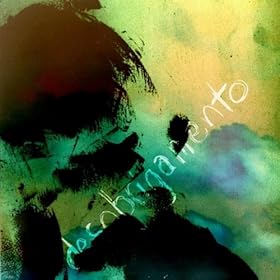
SubVersion Stop 67: Badmammal - Desobrigamento (goodluck/badluck CD)


He's carved out a unique sound, therefore it'd be foolish to accuse Chris Matule, the man behind the Badmammal project, of bandwagon-jumping. His previous life as Process, signed to leftfield drum 'n' bass stable Ohm Resistance, could implode his individuality to movements such as "minimal", with stripped down bore-fests the worst case scenario. What his work implicitly signifies - simplicity with a nuanced edge - is married with far-reaching titling, and a stylistic IDM middle with Venetian Snares' "Cavalcade Of Glee", and Mu-Ziq's "Duntisborne Abbots Soulmate Devastation Technique".

Taken from a book that uses several languages, especially Spanish and Portuguese, "Desobrigamento", Matule's fourth self-released CD, is definitely on par with "Carrying A Deranged Gospel Choir", his debut for the imprint. From first listen, one notable feature is its adherence to a similar speed throughout. Appreciation arises from catchy melodic phrases, but "Desobrigamento" ultimately shines due to its percussive versatility.

"Paper 8s" is a highlight early on, marrying honeycomb melodic timbres to drum metamorphosis. Adrenalin-rush-inducing moments prolong the intoxicating vibe. I can imagine a track like this going down well at a house party, early morning, with drinks in hand. This could also be said of the entirety.

Dedicated to a friend whose father passed away, “Sending And Taking” is for me the epitome of the Badmammal brand - lots of heart-grabbing melodics by way of strings and strums, correlative, subdued beat programming that doesn't detract from the lavishness of instrumentation, and soul in spades. Leave it to “Desobrigamento” to reinforce belief in what's worthwhile, and brighten up one's day. Language barriers aren't applicable here.

Purchase: CD & listen to audio

SubVersion Stop 66: Muttley - Closing Down (January 2010)

Carl Sagan's Ghost's "Closing Down" was the initiator for this concept - undertaking with association triggers. Sometimes I'm afflicted by nervous energy, and I have to disconnect from my computer or internet; in essence, to close down.

"Closing Down" is a specially made soundtrack - like "The Eyes, They See An Ominous Pillar" was, that serves to heal reaching normality once again, spanning 34 minutes.

"Now, well now it's time, to pull yourselves into lines, and raise and rise, push your leaves and branches high" sings Leo Chadburn at the tail end; a telling narrative to pick yourself up whatever background you have. This won't be to everyone's taste.

TRACKLISTING

01.
Carl Sagan's Ghost - Closing Down (from the EP Colonian Spa)
02. Matthew Robert Cooper (Eluvium) - Radial Summer / Signal Evening (from the album Peeling)
03. Richard Skelton - Scar Tissue (from the album Landings)
04. Charles Stanyan - The Path From My Door At Night (from the album Peeling)
05. Last Days - May Your Days Be Gold (from the album The Safety Of The North)
06. Darren Harper - The Long Goodnight (from the album Time Forgotten)
07. Olafur Arnalds - Vi Vorum Sm (Dyad 1909 Version) (from the album Dyad 1909)
08. Andrea Belfi - Sleeping With Extraevil (from the album Between Neck And Stomach)
09. Language Of Landscape - And The Rain Embraced Our Closing Worlds (from the album Memories Fade Under A Shallow Autumn Snow)
10. Leafcutter John - Let It Begin (from the album The Forest And The Sea)

Download

Wednesday, 27 January 2010

SubVersion Stop 65: Mister Vapor & Altus - Falling Out Of Orbit LP (Just Not Normal 072)

Normality can be priceless, but all the same, there are times when the lure of pastures anew surges through our souls, and demands us to try out new things. Just Not Normal could well be an oasis for music that strays from the conditional norm. As a newcomer to the netlabel, with a weighty 71 releases already in cyberspace, you have to wonder, as is often the case with the digital realm, if quality matches quantity, or antiquation can co-exist with enigmatic fervour.

No matter: Mister Vapor and Altus produce a fine sound on "Sparse Reaches". It's an atmospheric drone work of lengthy stature (25 minutes), in intellectual similarity to the detail of Robert Rich's New Age ambient of "Calling Down The Sky" ilk. Whereas drones can drain the vitality of a listener's attention span, Vapor and Altus usher in a variety of compositional techniques to keep you on the edge of your seat.

"Falling Out Of Orbit" is an appropriate album name - "Immense Revolutions", however, deceptive. It's slower moving, employing twinkle-timbre synthetic washes within an eighth, with a sole drum hit jogging any sedated attendants from drifting out of the auditory stratosphere. Light repetition of notation is thickened by dense walls of atmosphere - Italy's Oophoi springs to mind. When you're close to a quarter of its timespan there are satisfying chord assemblages resonating over reverberated minor keys.

The most important role this LP plays is multifarious - I am piqued to investigate more from Mister Vapor and Altus as singular identities, and the notion of filling up my hard drive with the Just Not Normal tag transposes a delight and not a chore. Which description I leave with on sustained hearing remains to be seen, but for now the future looks rosy.

Download: Mp3 & Flac releases

Mister Vapor: MySpace
Just Not Normal: wordpress